


With the conclusion of the 2026 Investing in African Mining Indaba in Cape Town, it became evident that the trajectory of the mining sector will be determined not only by mineral endowments, market dynamics and capital investment, but by the strength of skills development and collaborative partnerships.
Against this backdrop, the Mining Qualifications Authority (MQA) emerged not merely as a participant in the Indaba conversation, but as a central enabler of South Africa’s mining future that aligns human capital development with sustainability, competitiveness and transformation in a rapidly evolving sector.
Celebrating its 30th anniversary this year, the MQA stands as the only Sector Education and Training Authority (SETA) in South Africa to reach this milestone. From modest beginnings in 1996 with a staff complement of just 15, the organisation has grown into a nationally strategic institution employing nearly 200 professionals and driving skills development across the mining and minerals value chain.
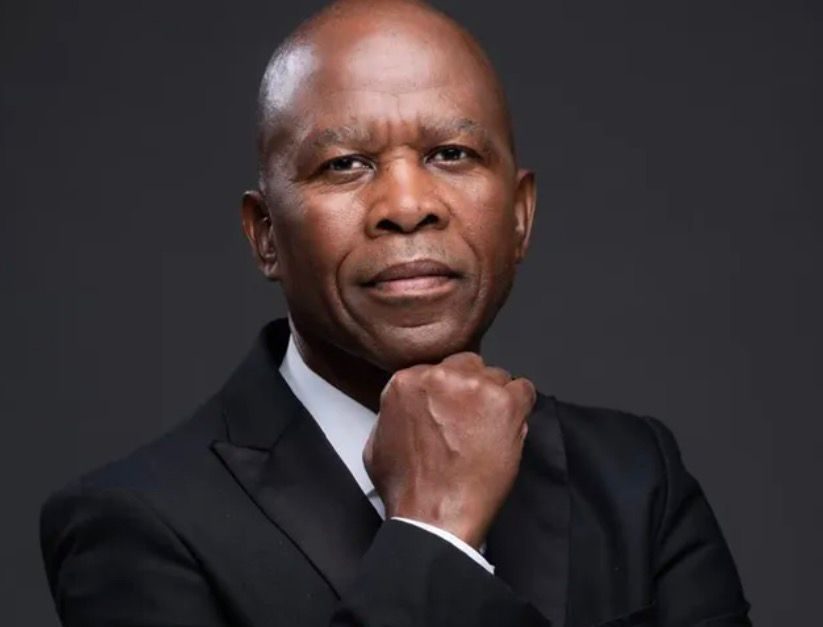
“This growth is not about scale for its own sake,” said MQA CEO, Dr Thabo Mashongoane (pictured), during his address at the Mining Indaba. “It reflects impact with real outcomes for safety, productivity, transformation and community development.”
Over three decades, the MQA has supported more than 800 000 learners across the sector, including over 200 000 adult education beneficiaries, nearly 60 000 artisans and artisan aides, 80 000 occupational health and safety representatives, 40 000 bursary recipients and tens of thousands of learners in internships, work experience, learnerships and management development programmes.
These interventions have not only strengthened the skills pipeline but have contributed meaningfully to improved occupational health and safety outcomes and a more inclusive mining workforce.
Aligning national priorities with future mining skills
Importantly, the MQA’s presence at the Mining Indaba as part of the Department of Mineral and Petroleum Resources (DMPR) delegation reinforced a critical message. Skills development is not peripheral to mining policy. It is foundational. The authority’s longstanding partnership with the DMPR has ensured alignment between national development priorities, sector transformation objectives and the evolving skills demands of modern mining.
As mining moves decisively toward automation, digitisation and green technologies, the MQA is repositioning itself to anticipate future skills requirements while ensuring current workers are not left behind. Through reskilling and upskilling initiatives, partnerships with universities and TVET colleges and a growing focus on future-oriented occupations, the MQA is bridging today’s realities with tomorrow’s workforce needs.
“Our mandate is clear,” Dr Mashongoane noted. “We must prepare South Africa with future mining skills while remaining deeply grounded in the socio-economic context of our country.”
He also stated that the appointment of Dr Nomusa Zethu Qunta as the new chairperson of the MQA board marks a significant leadership moment for the organisation. Her appointment reinforces the MQA’s commitment to ethical governance, institutional stability and the acceleration of women’s participation across the mining value chain.
Mining Skills Lekgotla advancing sector alignment
Looking ahead, the upcoming Mining Skills Lekgotla, to be held on 26–27 February 2026, represents a strategic inflection point rather than a routine stakeholder event. Positioned as a high-level consultative platform, the Lekgotla will convene government, industry, organised labour, training institutions and communities to collectively shape the next generation of mining skills, aligned to the National Skills Development Plan 2030.
“The Lekgotla is about co-creating solutions,” said Dr Mashongoane. “It is where policy intent, industry realities and skills planning meet to ensure mining remains competitive, inclusive and sustainable.”
As South Africa reflects on the outcomes of the Mining Indaba and prepares for critical sectoral engagements ahead, the MQA’s role is increasingly clear. It is not simply a training authority but a strategic partner in nation-building that ensures the future of mining is built not only on what lies beneath the ground but on the skills, dignity and potential of the people above it.
“For 30 years, the MQA has shown that when skills are developed with purpose, transformation becomes real and the future becomes possible,” Dr Mashongoane concluded.